.svg)
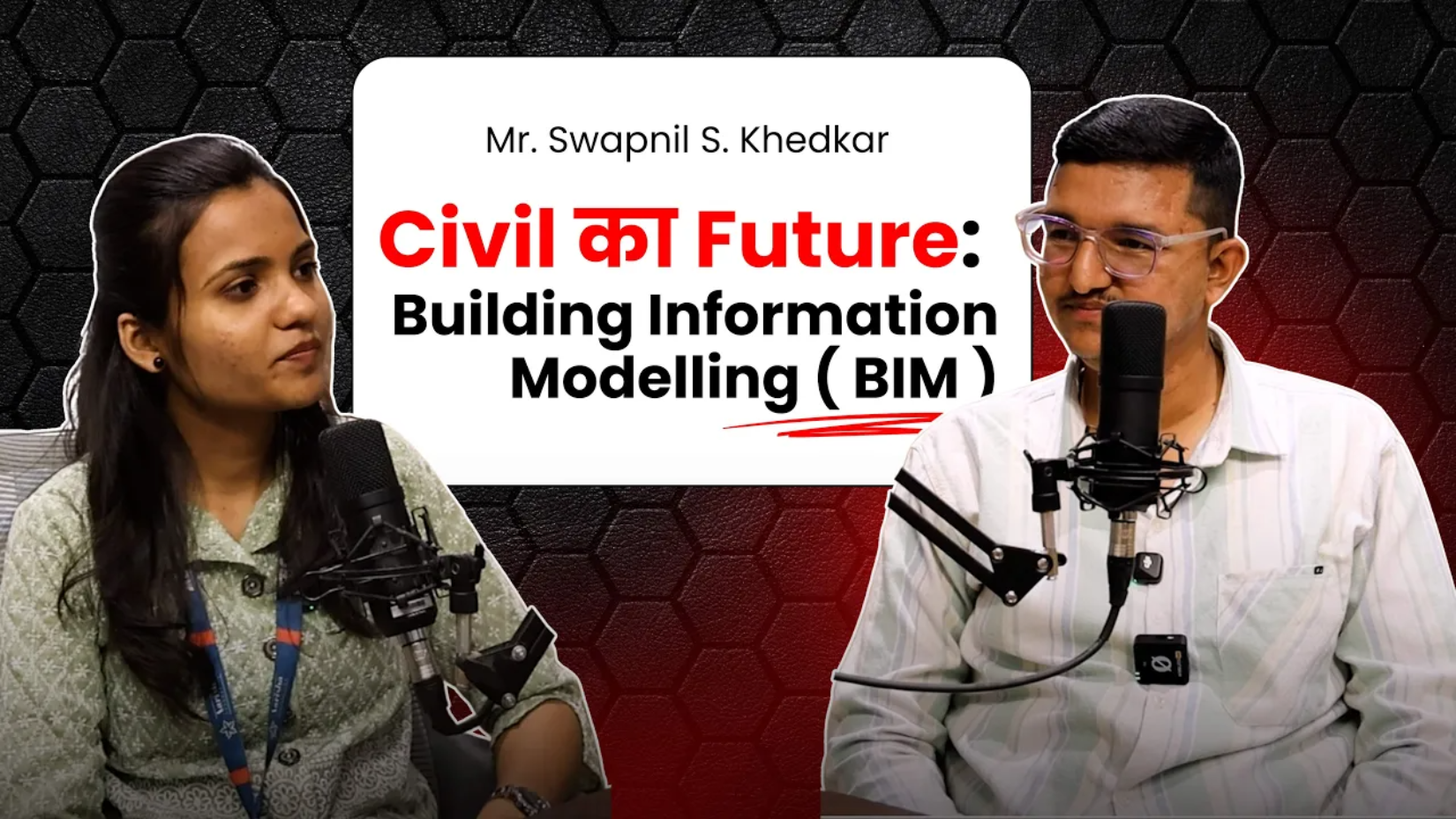
Civil engineering is often misunderstood as a profession limited to construction sites, government jobs, or physically demanding roles that leave little room for flexibility or balance. For years, students believed that once they chose civil engineering, their future was fixed around site supervision, contractor work, or competitive government exams. Education and Beyond with ABC Trainings breaks this outdated perception and presents a realistic, experience-driven view of how civil engineering careers are evolving today.
This episode explores the complete professional journey of a civil engineer, starting from early education decisions, moving through diploma and engineering, entering government contracting, facing real-world challenges, and finally transitioning into software-based work through Building Information Modeling. It highlights why software skills are no longer optional and how structured training environments like ABC Trainings help engineers adapt confidently.
This blog presents a comprehensive, student-focused narrative designed to help aspiring and practicing civil engineers understand where the industry is heading and how they can prepare themselves for a stable, balanced, and future-ready career.
One of the earliest and most critical decisions for any engineering aspirant is choosing the right academic path after school. Many students directly opt for a diploma after the 10th standard, followed by engineering. However, Episode 19 presents an alternative approach that emphasizes clarity over speed.
Completing the 12th standard before pursuing a diploma allows students more time to understand their interests and strengths. Up to the 12th level, many students experience confusion about career direction. Choices are often influenced by peer pressure or trends rather than a clear understanding of the profession. By completing the 12th standard first, students gain maturity and a broader perspective.
A diploma in civil engineering plays a crucial role in building strong fundamentals. It focuses on practical aspects such as construction techniques, materials, drawings, and site execution. These fundamentals make engineering studies easier and more meaningful later. Students who complete a diploma before engineering often find that their basic doubts are resolved early, allowing them to approach advanced subjects with confidence rather than struggle.
This structured progression helps students avoid feeling lost during engineering and creates a strong foundation for both technical and professional growth.
Information technology is often seen as the safest career option due to higher starting salaries and quicker job placements. However, Episode 19 highlights an important reality that salary alone does not guarantee satisfaction.
Many IT professionals work long hours, often eight to ten hours daily, yet still feel disconnected from their work. The nature of the job can become repetitive, with limited creative freedom. Over time, this leads to dissatisfaction despite financial stability.
Civil engineering, on the other hand, offers a deeper sense of involvement and purpose. It involves working directly with people, understanding real-world problems, and contributing to infrastructure that lasts for generations. Roads, buildings, houses, and public spaces create a visible and lasting impact on society.
Civil engineering also has lifelong relevance. Development does not stop after five or ten years. As long as cities grow and infrastructure is needed, civil engineers remain essential. When combined with modern software tools, civil engineering becomes a powerful blend of creativity, technology, and real-world execution.
After completing engineering, many civil engineers choose to enter government contracting. This path requires obtaining the necessary licenses, such as those issued by Zilla Parishad and PWD. The licensing process involves submitting academic documents, domicile certificates, and fee payments. It is not instant and often takes up to two years.
Once licensed, engineers can begin taking on government projects. Smaller works below certain budget limits may not require formal tendering and can sometimes be obtained through references. Larger projects, especially PWD works, require online tender participation, machinery availability, skilled labor, and financial capability. Typically, the lowest bidder secures the project.
At this stage, engineers are no longer just technical professionals. They become leaders. They are responsible for managing labor, coordinating materials, handling site execution, and ensuring timely completion. This transition from engineer to leader happens very early in contracting careers.
Leadership in contracting is practical and demanding. It is not about authority but about responsibility. Engineers must deal with laborers who may not always follow schedules, suppliers who face delays, and owners who expect quick results.
Calm communication becomes essential. Losing patience or reacting emotionally only worsens site conditions. Successful team building requires understanding people, maintaining discipline without conflict, and ensuring that work continues smoothly even during setbacks.
Financial planning is another leadership responsibility. Contractors often need to manage cash flow carefully, especially when payments are delayed. Without strong financial backing, even well-executed projects can become stressful.
Contractor work is often seen as lucrative from the outside, but Episode 19 reveals the challenges rarely discussed openly.
Labor availability remains one of the biggest issues. Workers may not arrive on time, may leave projects midway, or may demand higher wages unexpectedly. Skilled labor is especially difficult to retain.
Payment delays are another major challenge. Even after completing work on time, contractors cannot always rely on prompt payments. This creates pressure to take loans just to keep projects running. Over time, this financial strain becomes exhausting.
Site work also demands constant physical presence. Contractors often need to be available day and night, including weekends. This affects health, family life, and mental well-being. Without balance, sustaining this lifestyle becomes difficult in the long run.
Exposure to Building Information Modeling marks a turning point for many civil engineers. BIM introduces a new way of working where ideas are expressed digitally instead of verbally or through rough drawings.
Software tools such as AutoCAD and Revit allow engineers to convert concepts directly into detailed designs. Instead of explaining ideas on site, engineers can visually demonstrate them through models. This clarity reduces misunderstandings and execution errors.
BIM also reduces dependency on large teams. Even a single skilled professional can manage complex design coordination efficiently. Compared to traditional 2D drafting or basic 3D modeling, BIM allows deeper exploration of ideas, better coordination, and improved accuracy.
Earlier, civil engineering careers were largely limited to government jobs or contracting. Today, the industry is shifting toward software-driven workflows.
Software skills save time, reduce errors, and improve productivity. They allow engineers to work smarter rather than harder. Even contractors who outsource design work benefit from understanding software themselves. Knowledge provides control, confidence, and the ability to evaluate work quality properly.
BIM is already a priority in countries like the USA and Dubai. While it is still developing in India, its adoption is increasing steadily. Engineers who invest in these skills early gain a significant advantage.
Self-learning software without guidance can lead to confusion and incomplete understanding. Episode 19 emphasizes the importance of structured training environments.
At ABC Trainings, the teaching approach focuses on individual attention rather than large batches. One-on-one teaching ensures that students feel comfortable asking questions, even basic ones. There is no hesitation or fear of judgment.
Weekly projects play a key role in skill development. They encourage students to apply what they learn, strengthening understanding and building confidence. Doubts are resolved on the same day, preventing knowledge gaps from growing.
The learning atmosphere is friendly and supportive. Faculty understand that students may be beginners and ensure that concepts are explained clearly, from fundamentals to advanced applications.
ABC Trainings supports learners across Pune, Sangli, Latur, and Chh. Sambhajinagar, making quality training accessible to students from different regions.
Contracting and BIM represent two very different professional lifestyles.
Contracting requires continuous site supervision, labor management, financial risk-taking, and physical presence. It can be rewarding but is highly demanding and unpredictable.
BIM, on the other hand, allows engineers to work in a calmer, desk-based environment. It supports office work, remote work, and flexible schedules. Engineers can focus on creativity, design quality, and coordination rather than constant site pressure.
For those seeking a balanced, idea-driven career, BIM offers a sustainable alternative without disconnecting from core civil engineering principles.
Civil engineering offers both job and business opportunities. In jobs, engineers follow instructions and work within defined roles. In business, whether contracting or software-based services, engineers have greater freedom.
Business roles allow professionals to choose projects, manage time, and grow independently. However, business also comes with risks. Competition is high, and old methods no longer work.
Adopting new skills and technologies such as BIM and AI is essential for success in both job and business paths. Those who resist change risk falling behind.
After recent global changes, many professionals from different fields moved toward IT. Episode 19 offers a grounded perspective on this trend.
Instead of abandoning civil engineering, engineers are encouraged to upgrade within their own field. Civil engineering itself is evolving through software and digital workflows. BIM provides a technology-driven career path while retaining engineering identity.
Switching fields entirely may not always be necessary when growth opportunities already exist within one’s chosen profession.
Freshers often worry about employability after graduation. Episode 19 offers practical guidance.
Final-year engineering students can begin BIM training alongside their academics. Within six months, they can complete foundational courses and become industry-ready. Combining fresh academic knowledge with BIM skills significantly improves confidence and readiness.
BIM offers flexibility. Engineers can work from offices, from home, or even start independent services. The field welcomes fresh graduates, working professionals, and career switchers alike.
A common belief suggests that civil engineering requires a family background in construction or that success is limited to government jobs. Episode 19 strongly challenges this myth.
With modern tools and structured learning, anyone can build a successful civil engineering career. Technology has expanded opportunities beyond traditional boundaries. Civil engineering today includes design, coordination, digital modeling, and global collaboration.
Site-based roles often disrupt personal life. Long hours, night shifts, and constant availability leave little time for family or health. Over time, this imbalance takes a toll.
Software-based careers such as BIM offer a more sustainable alternative. Engineers can maintain professional growth while protecting personal well-being. This balance is increasingly important for long-term career satisfaction.
ABC Trainings plays a vital role in helping engineers adapt to industry changes. Through focused teaching, individual attention, and practical projects, students gain clarity and confidence.
The training environment ensures that no doubt remains unresolved. This approach helps learners move forward without fear, whether they are students, fresh graduates, or working professionals.
With centers in Pune, Sangli, Latur, and Chh. Sambhajinagar, ABC Trainings provides accessible, consistent learning support across regions.
Civil engineering is no longer confined to sites and traditional roles. It is evolving into a profession driven by software, creativity, and strategic thinking. From education choices to contracting challenges and finally to BIM-based careers, Episode presents a realistic and inspiring roadmap for engineers.
Those who invest in learning, adapt to new tools, and choose structured training environments position themselves for long-term success. The future belongs to civil engineers who are willing to evolve.
📞 Call: +91 8698270088
🌐 Visit: https://abctrainings.in/
This article is based on the “Education and Beyond with ABC Trainings” podcast series, where we explore the intersection of education, industry, and personal growth.
Copyright © 2025 ABCTrainings - All rights reserved